
TL;DR / Quick Answer: Christopher Smith began growing medicinal herbs in Australia after reading Matthew Wood's The Book of Herbal Wisdom in 2006 and discovering that the rare herbs described - Solomon's Seal, Sweet Leaf, Teasel - simply weren't available anywhere in the country. His horticultural background kicked in, and what started with one plant became a decades-long commitment to growing, conserving, and teaching others about rare medicinal herbs. The core reason: if we grow our own, wild plants are left alone, supply chains don't matter, and herbal medicine has a future.
Most people who grow herbs start with a packet of seeds and a sunny windowsill. My story started with a book that made me realise the herbs I needed didn't exist in Australia. So I grew them myself.
Why Does a Herbalist Grow Their Own Medicinal Plants?
It is a question I get asked often, and the honest answer is: because nobody else was doing it. Not for the herbs I needed. Not in Australia. Not in any quantity that mattered.
Understanding someone's WHY - the reason behind what they do - tells you a great deal about how they do it. Here is mine.
The Book That Started Everything
It was 2006. I had been interested in herbs for a while and had done some courses at The Hierophant in Griffith, ACT. Then I read The Book of Herbal Wisdom by Matthew Wood.
If you have not read it, Matthew is a North American herbalist with a deep, almost old-world knowledge of plants. In that book he wrote about herbs like Solomon's Seal, Sweet Leaf, and Teasel - plants with real medicinal depth, plants with history and character.
I was entranced. Genuinely excited in the way you get when something opens a door you did not know was there.
So I went straight to The Hierophant - the go-to place in Canberra for herbs and homeopathics - and asked about these plants.
They had none of them. Not one.
What Do You Do When the Herb You Need Doesn't Exist in Australia?
For most people, that would have been the end of it. For me, my horticultural training quietly spoke up.
You have grown Solomon's Seal before. You could do it again.
So I went looking. Found a nursery in the Southern Highlands that had the plant. Bought some. Started growing and propagating. And waited for the day - which eventually came - when I had enough to make a small amount of tincture.
That was the moment it all started.
What Happened Next: From One Plant to 120 Species
It got, as these things do, a little out of hand.
A botanical collection of as many medicinal herbs as I could find and propagate appeared on the farm. By 2010, when I met Ken Atherton at Pindari Herbs in Tasmania, I was well on my way to a serious collection. Ken mentioned he had hit his peak at 120 species and found that was enough.
In my arrogance at the time, I thought he could try a bit harder.
The Drought Changed Everything
Then the drought came. Three years of it. Trying to keep 120-plus different herb species alive through that was too much. A lot of plants went by the wayside. Ken was right.
The lesson was hard but clear: focus. Decide which herbs genuinely matter to you and your practice, and commit to those. Stop trying to be a botanical ark.
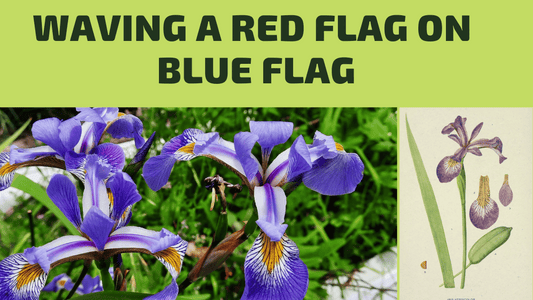
Solomon's Seal is now firmly established on the farm. Golden Seal is the next chapter - but that is a story for another time. You can read more about the challenges of sourcing and growing rare medicinal herbs in the post on why Blue Flag has become so hard to source.
Why Growing Your Own Medicinal Herbs Matters More Than Ever
Here is the part that goes beyond my personal story.
If herb growers across Australia are cultivating medicinal plants, then plants in the wild are left alone. Habitats are not stripped. Endangered species get a chance to recover.
We have all seen how quickly supply chains can fail. Goods disappear from shelves with very little warning. Herbs are no different. If your supply depends entirely on imported product or wild harvest, you are one disruption away from having nothing.
Growing your own changes that equation entirely. It is sustainable growing - no wild harvest, no importation dependency, no empty shelves. And it creates real livelihoods for people who care about doing it properly.
This is exactly why I teach what I teach inside Herbology Hub. Not just how to grow herbs, but why it matters - for your practice, for conservation, and for the future of herbal medicine in this country. If you want to understand more about the conservation side of this, have a read of what you can do to protect endangered medicinal herbs.
Frequently Asked Questions About Growing Medicinal Herbs
Why should I grow my own medicinal herbs instead of buying them?
Growing your own gives you control over quality, freshness, and provenance. It also reduces pressure on wild plant populations and imported supply chains. For rare or endangered herbs especially, cultivation is one of the most meaningful things a herbalist or herb grower can do.
What medicinal herbs are hardest to source in Australia?
Herbs like Solomon's Seal, Golden Seal, Osha (Ligusticum porteri), Blue Flag, and Lomatium have historically been difficult or impossible to source in Australia. Most have had to be imported, which affects quality and availability. Growing them locally is both practical and important for conservation.
How many herb species should a herb grower focus on?
Fewer than you think. The temptation is to grow everything, but focus produces better results - better plants, better medicine, and a more sustainable operation. Start with the herbs most relevant to your practice or interest and build from there. Quality over quantity, always.
Is it legal to grow medicinal herbs in Australia?
Most medicinal herbs can be grown legally in Australia for personal use and education. Some species have specific restrictions, particularly those with scheduled constituents. Always check current regulations for your state and the specific plant before growing for commercial supply or therapeutic use.
How do I start growing rare medicinal herbs from scratch?
Start with one plant you genuinely care about. Learn its growing requirements thoroughly - soil, water, light, propagation method. Get it established before moving on to the next. The biggest mistake new herb growers make is trying to grow too many things at once before they understand what each plant actually needs.
Why This Matters
The story of how I started growing medicinal herbs is also the story of why Australian herb growing matters at all. We cannot keep relying on wild harvest and imported product. We cannot keep assuming the herbs we need will always be available.
The answer is growers. People who are willing to learn what a plant needs, give it the right conditions, and tend it over years - not weeks. People who understand that growing medicinal herbs is a long game, and that the rewards are worth it.
In 2018, Matthew Wood visited the herb farm. As he left, he said: "Christopher, thanks for establishing Solomon's Seal in Australia and making it available for everyone."
That made it all worthwhile.
Ready to Grow With Purpose? Join Herbology Hub
If this resonates with you - if you want to grow medicinal herbs with real knowledge behind you, not just guesswork - Herbology Hub is where we do that work together. It is a community and learning space for serious herb growers who want to understand their plants deeply and grow them well.
Join Herbology Hub here and start growing with purpose.
First published: August 2022 | Last updated: June 2026